2026-09-03 ·
How to Remove Monsoon Mold from Mumbai Apartments
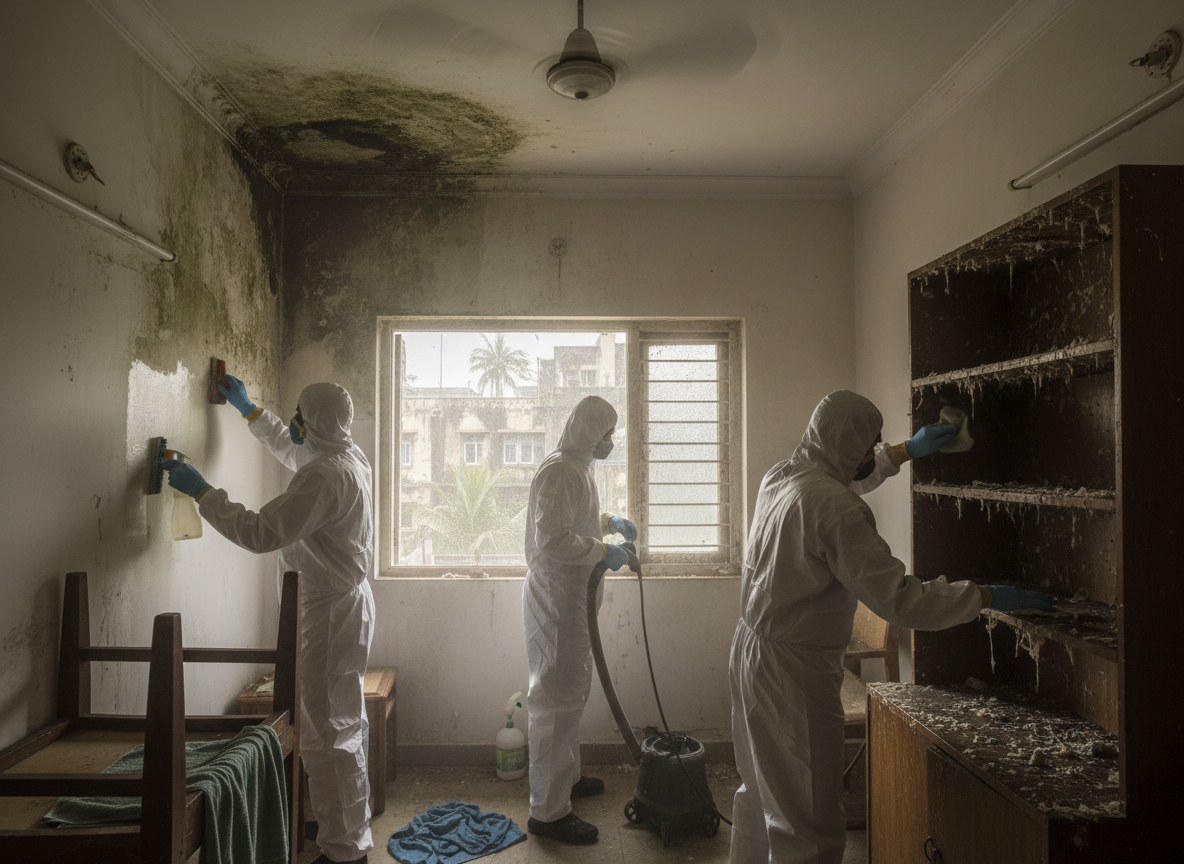
Mumbai apartments often need 3–7 days of focused work to clear monsoon mold once moisture sources are fixed, starting with ventilation improvements and targeted cleaning in high-risk spots like bathrooms and window frames.
Spotting Mold Triggers in Mumbai Buildings
Mumbai's June-to-September monsoon brings daily downpours and 80–90% humidity that seeps into older structures common in Bhuleshwar and Marine Lines. These pre-1980 buildings frequently feature cracked plaster, single-pane windows, and shared walls that trap damp air. Check corners near AC units, under kitchen sinks, and along bathroom tiles where water pooling occurs fastest. Early signs include musty odors after rain and small black spots on ceilings. Residents in Colaba and Worli report similar issues in sea-facing units where salt air accelerates growth. Addressing these triggers first prevents recurrence during the remaining wet months.
Safe Removal Steps for Apartment Interiors
Begin by opening windows on dry days and running exhaust fans for at least four hours daily to lower indoor moisture. Mix equal parts white vinegar and water in a spray bottle, apply to affected tiles or walls, wait 15 minutes, then scrub with a nylon brush before wiping dry. For fabric items like curtains, vacuum first then wash in hot water if labels allow. Wear gloves and a mask during work, and dispose of heavily infested sponges immediately. Repeat applications every other day for a week in persistently humid rooms. This approach works well in compact layouts typical of Bandra West and Andheri West flats where space limits airflow.
Preventing Regrowth After Monsoon Season
Install small dehumidifiers in closed rooms and empty them daily during peak humidity. Seal window gaps with weather stripping to block driving rain common along the western suburbs. Schedule periodic Full Home Deep Cleaning to reach behind furniture and under beds where spores settle. Wipe down bathroom surfaces weekly with the same vinegar solution, focusing on grout lines that retain water longest. In areas like Juhu and Powai, where newer high-rises still face condensation on glass, using squeegees after showers reduces surface moisture quickly.
When Professional Help Becomes Necessary
Persistent patches larger than a dinner plate or mold returning within two weeks usually signal hidden leaks behind tiles or in ceiling cavities. At that point, contact a service familiar with Mumbai's aging stock rather than attempting deeper demolition yourself. Review the Deep Cleaning Checklist for Mumbai Homes Before Diwali to prepare spaces for thorough treatment. Teams operating from bases like Bhendi Bazaar understand local water pressure limits and drainage quirks that affect drying times in dense neighborhoods.
Long-Term Care for Mumbai Apartments
Track humidity with a simple meter aiming for under 60% indoors once rains ease. Clean or replace AC filters monthly during monsoon to stop spore circulation. For carpeted areas, use Carpet And Rug Cleaning services that employ extraction methods suited to humid conditions. Regular attention to these details keeps mold from returning in the compact, high-occupancy buildings found throughout the city.